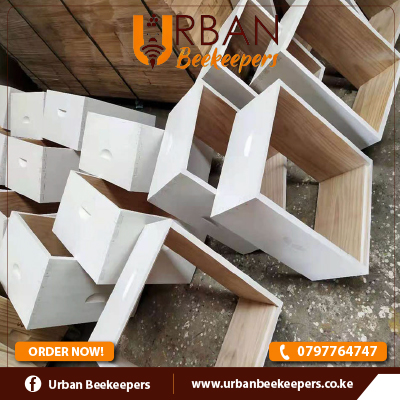




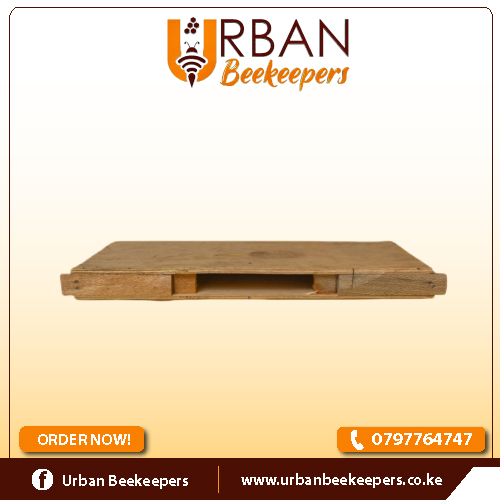

The Beehive Bottom Board is the foundational floor component of a Langstroth beehive. It sits beneath the brood box, creating the hive’s entrance, landing platform, and floor. It is an essential structural component for assembling new Langstroth hive units or replacing worn components in an existing apiary. Standard Langstroth bottom boards are compatible with all Urban Beekeepers Langstroth hive boxes and supers.
What Is the Beehive Bottom Board?
The bottom board is the lowest component in a Langstroth hive stack, positioned directly on the hive stand. It serves three functions: it forms the hive floor that supports the weight of all boxes above it; it creates the hive entrance through which bees enter and exit; and it provides a landing strip that foragers use when returning loaded with nectar, pollen, or water. Solid bottom boards are the standard design for most Kenyan beekeeping conditions, offering full floor coverage and easy debris management. The bottom board is sold separately from complete Langstroth Hives for beekeepers replacing components or assembling custom hive configurations.
Key Features and Technical Specifications
| Specification | Detail |
|---|---|
| Material | Timber — treated for outdoor use |
| Compatible Hive | Standard Langstroth hive |
| Function | Hive floor, entrance, and landing board |
| Entrance Type | Standard Langstroth entrance width |
Who Needs the Beehive Bottom Board?
- Beekeepers Assembling New Hives: When purchasing individual hive components to build new Langstroth units, the bottom board is required as the base.
- Commercial Apiaries Replacing Components: Bottom boards deteriorate with outdoor exposure over time. Replacing worn or damaged bottom boards is a routine maintenance task for commercial apiaries.
- CBOs and Cooperatives: Community groups assembling hive kits from individual components for income-generating projects.
How to Fit the Beehive Bottom Board
- Position on a hive stand. Place the bottom board on a flat, stable hive stand at least 30cm above the ground to prevent moisture damage and deter ground-level pests.
- Stack the brood box. Place the brood box directly on top of the bottom board, aligning the entrance gap with the front of the bottom board landing platform.
- Set entrance size. Use an entrance reducer to narrow the hive entrance on new or weak colonies. Remove or reverse the reducer as the colony grows stronger.
Why Buy From Urban Beekeepers?
- Kenya’s best beekeeping equipment shop — stocking high-quality and genuine beekeeping equipment
- In stock — same-day delivery within Nairobi
- Nationwide delivery to all major towns across Kenya
- Call or WhatsApp: 0797 764 747
- Trusted by commercial farmers, CBOs, and NGOs across Kenya
- Urban Beekeepers accepts M-Pesa, card, cash and bank transfer payments
Shipping and Delivery
Urban Beekeepers delivers countrywide to Mombasa, Kisumu, Nakuru, Eldoret, Machakos, Kitengela, Kitui, and all major towns across Kenya. Same-day delivery within Nairobi. Call 0797 764 747 to confirm delivery timelines for your location.
Frequently Asked Questions
What is the difference between a solid and screened bottom board?
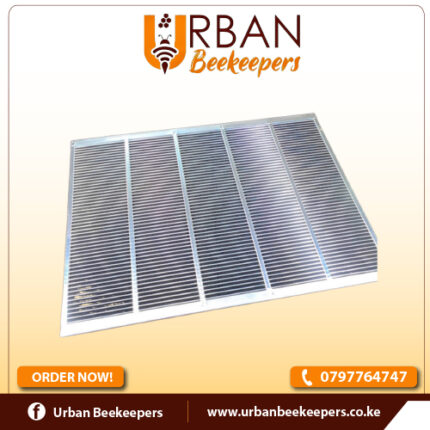
A solid bottom board has a fully enclosed wooden floor, offering better insulation and suited to most Kenyan highland and inland conditions. A screened bottom board has a wire mesh floor that improves ventilation and allows debris and mites to fall through — useful in hot lowland regions and for integrated varroa management programmes.
Does Urban Beekeepers deliver the Beehive Bottom Board outside Nairobi?
Urban Beekeepers delivers countrywide to Mombasa, Kisumu, Nakuru, Eldoret, Machakos, Kitengela, Kitui, and all major towns across Kenya. Same-day delivery within Nairobi. Call 0797 764 747 to confirm delivery timelines.