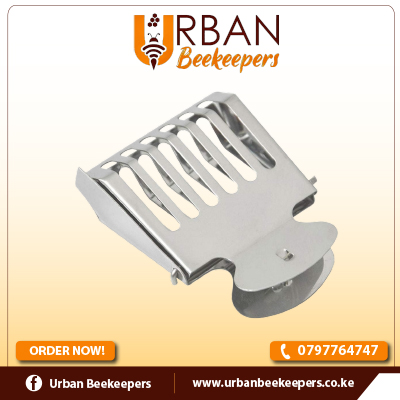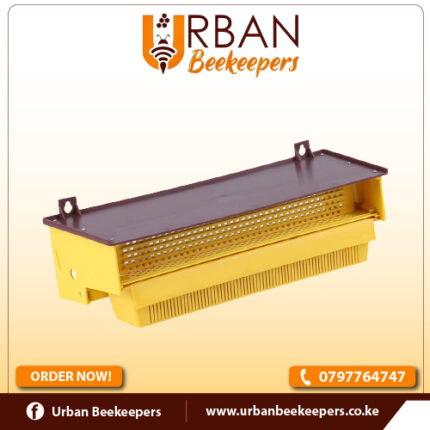




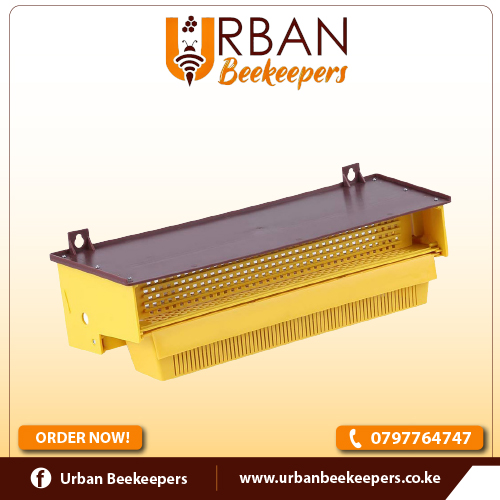
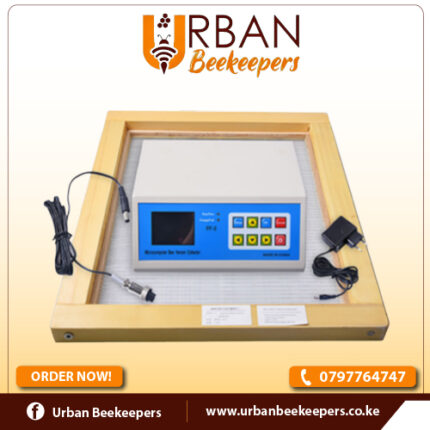

The Bee Pollen Collector is a specialty harvesting accessory that captures raw bee pollen from forager bees as they return to the hive. It fits at the entrance of a Langstroth Hive and uses a grid with holes slightly smaller than the size of a forager bee carrying a full pollen load. As foragers pass through, a portion of the pollen pellets is dislodged into a collection drawer below. Bee pollen is a high-value natural product sold for human consumption and health supplementation. See also the Bee Venom Collector.
What Is the Bee Pollen Collector?
The Bee Pollen Collector is a pollen harvesting accessory used at the entrance of an active Langstroth Hive. It works by fitting a perforated grid over the hive entrance. Forager bees returning with pollen loads squeeze through the grid holes, which dislodge approximately 50 to 60 percent of the pollen pellets into a collection tray below. The remaining pollen allows the forager to carry enough back for the colony’s nutritional needs. The collection tray is removed and emptied daily during peak pollen collection periods.
What Is the Price of the Bee Pollen Collector in Kenya?
The Bee Pollen Collector is priced at KSh 2,500 at Urban Beekeepers in Nairobi. In stock — no lead time. Same-day delivery within Nairobi. Nationwide delivery available to all major towns. Payment accepted via M-Pesa and card. Urban Beekeepers takes bulk orders. Call 0797 764 747 or message via WhatsApp to discuss.
💬 Order Now on WhatsApp — KSh 2,500
Key Features and Technical Specifications
| Specification | Detail |
|---|---|
| Design | Entrance pollen trap with perforated grid and collection tray |
| What’s Included | Bee Pollen Collector with grid and removable collection tray |
| Compatible Hive | Langstroth Hive |
| Pollen Capture | Approximately 50 to 60 percent of forager pollen load |
| Colony Impact | Minimal when not used continuously. Rest colony every 2 weeks. |
| Collection Tray | Removable for daily emptying |
| Price | KSh 2,500 |
Who Needs the Bee Pollen Collector?
- Commercial Beekeepers Diversifying Income: Honey farmers with productive Langstroth colonies who want to add bee pollen as a second income stream during peak pollen season.
- Health Product Suppliers: Producers and retailers of raw bee pollen for the health and wellness market in Kenya and for export.
- Research Institutions: Agricultural research bodies studying bee nutrition, pollen diversity, and pollination ecology in Kenyan environments.
- CBOs and Honey Cooperatives: Community honey projects that want to add pollen to their product range to increase income per hive.
How to Use the Bee Pollen Collector
- Install on a strong colony. Fit the Bee Pollen Collector at the entrance of a strong Langstroth colony during the main flowering season. Do not use on a weak colony or during dearth periods.
- Allow bees to adjust for 2 to 3 days. Bees will initially slow at the entrance. Within 2 to 3 days they learn to pass through and full foraging activity resumes.
- Empty the collection tray daily. Remove and empty the pollen collection tray each day, ideally in the morning. Transfer fresh pollen to a clean, dry container.
- Dry the harvested pollen immediately. Spread fresh pollen in a thin layer on clean paper in a well-ventilated, shaded area. Dry within 4 to 8 hours to prevent mould. Do not use direct sunlight.
- Rest the colony every 2 weeks. Remove the pollen trap for at least 2 weeks between collection periods to ensure the colony always has adequate pollen stores.
Care and Maintenance
Proper care extends the working life of your Bee Pollen Collector and keeps it performing effectively season after season.
- Clean the collection tray and grid daily during active collection. Pollen left in a damp tray ferments rapidly in Kenyan heat, making it unusable and attracting pests.
- Inspect the perforated grid for bent or blocked holes after each season. Blocked holes reduce pollen collection efficiency. Clean with a small brush or compressed air.
- Store the Bee Pollen Collector dry and covered between seasons. Mould growing inside the grid or tray during storage can contaminate the first pollen batch of the next season.
Why Buy From Urban Beekeepers?
- In stock — same-day delivery within Nairobi
- Nationwide delivery to all major towns across Kenya
- Call or WhatsApp: 0797 764 747
- Trusted by commercial farmers, CBOs, and NGOs across Kenya
- M-Pesa and card accepted
Shipping and Delivery
Urban Beekeepers delivers countrywide to Mombasa, Kisumu, Nakuru, Eldoret, Machakos, Kitengela, Kitui, and all major towns across Kenya. Same-day delivery within Nairobi. Call 0797 764 747 to confirm delivery timelines for your location.
Frequently Asked Questions
What is bee pollen used for in Kenya?
Bee pollen is consumed as a nutritional supplement and is sold in health food stores, pharmacies, and online in Kenya. It is also used in apitherapy, food supplements, and cosmetic formulations. Kenyan bee pollen has growing demand in both local and export markets.
Does the bee pollen collector harm the bees?
No, when used correctly. The Bee Pollen Collector removes approximately 50 to 60 percent of each forager’s pollen load, leaving the remainder for colony nutrition. Rest the colony from the trap for at least 2 weeks in every 4.
How much pollen can one hive produce per day?
A strong Langstroth colony during peak foraging season can yield 20 to 100 grams of raw pollen per day, depending on local floral diversity and colony strength.
How do I store harvested bee pollen?
Dry freshly collected pollen immediately to prevent mould and fermentation. Once dried, store in an airtight container in a cool, dark location. Refrigeration extends shelf life to 6 to 12 months.
Does Urban Beekeepers deliver the Bee Pollen Collector outside Nairobi?
Urban Beekeepers delivers countrywide to Mombasa, Kisumu, Nakuru, Eldoret, Machakos, Kitengela, Kitui, and all major towns across Kenya. Same-day delivery within Nairobi. Call 0797 764 747 to confirm delivery timelines for your location.